

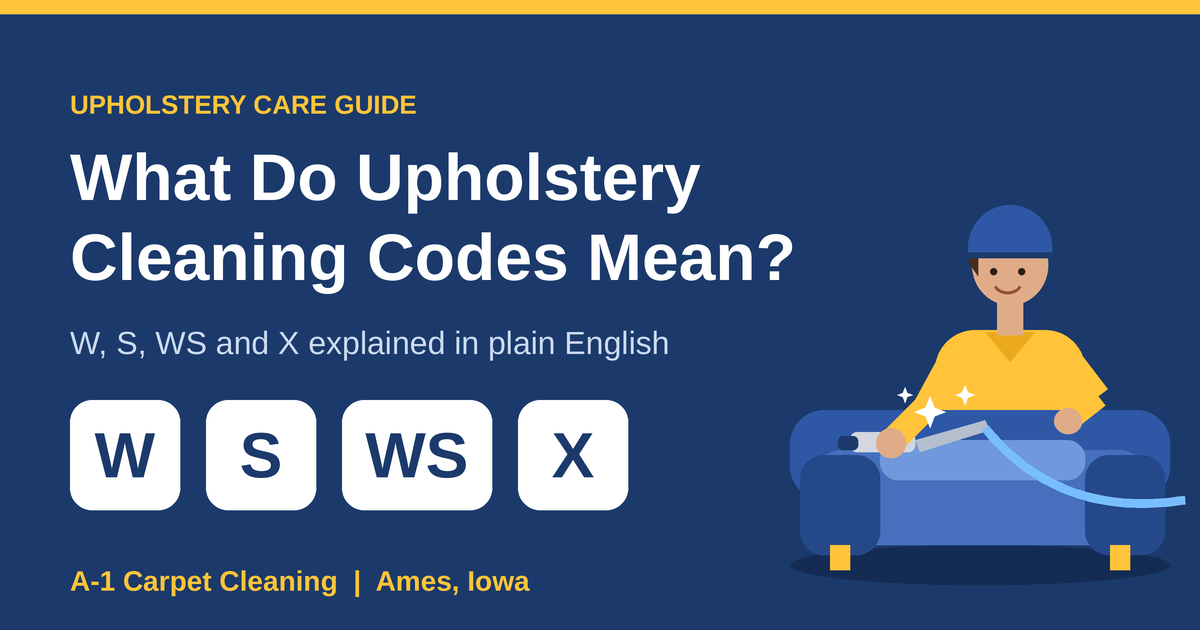
Upholstery cleaning codes are the letters on your furniture’s care label that tell you what kind of cleaning the fabric can handle. The most common are W, S, WS, and X. Pick the wrong product or use too much moisture and you can end up with water rings, faded color, or fabric that’s damaged for good.
The short version: W generally allows an approved water-based cleaner, S calls for a suitable water-free solvent, WS may allow either method, and X means vacuuming or light brushing only. Treat the code as a starting point, not permission to use any product, and check the furniture maker’s full care instructions.
Where Can You Find the Upholstery Cleaning Code?
Start by looking for the care label. Depending on the maker and design, you’ll usually find it:
- Under a seat cushion or on the seating platform
- On the underside of the frame
- Along the back or bottom of the sofa or chair
- In the original paperwork or care guide
Some labels show a single letter, others a longer set of instructions, and some are tucked away, so look carefully before you decide how to clean. If you can’t find or read the label, look up the brand and model or contact the manufacturer. Until you know the right method, stick to gentle vacuuming and skip water and solvents. A hidden spot test can show color changes, but it can’t tell you whether a method is approved for the fabric.
What Does Each Upholstery Cleaning Code Mean?
| Code | Meaning | What to do |
|---|---|---|
| W | Water-based cleaning | Use a water-based upholstery cleaner or foam the maker allows. Apply it sparingly and don’t over-wet the fabric. |
| S | Water-free solvent only | Use only an upholstery solvent suited to the fabric. No water, and don’t saturate the material. |
| WS | Water-based or solvent | Either a water-based cleaner or a suitable solvent can be used. Follow the product and furniture instructions. |
| X | Vacuum or light brushing only | No water-based or solvent-based cleaners unless the manufacturer says otherwise. |
You may also see SW or W/S. Label formats differ between brands, so follow the exact instructions that came with your furniture. If you use a solvent, work in a well ventilated room and keep it away from flames, pilot lights, and heaters, since many solvents are flammable.
Does the Code Tell You What the Fabric Is Made Of?
No. The code is about the cleaning method, not the material. Polyester, cotton, velvet, and microfiber are fabric types, and two sofas that look alike can have different codes because their dyes, backing, and finishes differ. Check the label on your own piece instead of copying what worked on someone else’s sofa.
Why the Upholstery Cleaning Code Matters
Water can leave rings on some fabrics, and the wrong solvent can discolor or damage others. Even when a code allows a type of cleaner, too much product, heat, or hard scrubbing can still cause problems.
A code also isn’t a full set of instructions. W or WS doesn’t mean a steam cleaner or hot water extraction machine is safe, since some makers limit heat, moisture, or machines. Check the complete care instructions first, and if they’re unclear, ask the manufacturer or a qualified upholstery cleaner.
Removable covers work the same way. A zipper doesn’t mean the cover is machine washable, so check the sewn-in label before you wash or dry it.
Safe Upholstery Care Tips for Every Code
- Blot fresh spills with a clean white cloth. Don’t rub, which can push the stain deeper.
- Vacuum regularly with an upholstery attachment, especially along seams and gaps where crumbs collect.
- Check the label before using any spot cleaner, even one you’ve used on other furniture.
- If the code allows a cleaner, test it on a hidden spot and let it dry fully before checking for changes in color or texture. Stop if anything changes.
- Use only the amount the product directs, and don’t soak cushions.
- Keep furniture out of long stretches of direct sun, which can fade some fabrics.
When Should You Call an Upholstery Cleaning Professional?
Get professional advice if your furniture is marked S, the fabric is delicate or valuable, the label is missing, or a stain doesn’t respond to an approved home method.
X-coded pieces are the most restrictive. The label generally allows vacuuming or light brushing only, so don’t assume a pro can wet clean or solvent clean it. The manufacturer may need to say what options, if any, are okay. If you’re weighing your options, read our guide to professional upholstery cleaning vs DIY.
Upholstery Cleaning in Ames and Story County
A-1 Carpet Cleaning is family owned and serves Ames and Story County. Doug and Renae have been helping local customers since 2004. Our upholstery cleaning is designed to care for furniture according to its fabric and cleaning requirements. Everyday use can leave sofas with spills, soil, and wear. If you’re unsure what your furniture’s tag allows, call us first and we’ll talk through the label and your options. Learn more about our upholstery cleaning service in Ames or call (515) 432-7500.
Frequently Asked Questions
What does W mean on an upholstery label?
W means a water-based upholstery cleaner or foam may be suitable for the fabric. It doesn’t mean you can soak the furniture or use any household cleaner. Follow the furniture maker’s instructions and apply the product sparingly.
What does the S code mean on upholstery?
S means the fabric calls for a water-free upholstery solvent. Skip water-based cleaners and use only a solvent suited to that fabric, following its label. Work with good ventilation and away from flames, and if you’re unsure, get professional advice.
What does WS mean on a furniture cleaning tag?
WS generally means you can use either a water-based upholstery cleaner or a suitable water-free solvent. Pick one, never mix products, and check the furniture and product instructions first.
What does upholstery code X mean?
X means vacuum or lightly brush only. Skip water-based and solvent-based cleaners unless the manufacturer says otherwise. For a stain, ask the manufacturer before assuming a professional can wet clean it.
Can I steam clean a sofa with a W or WS code?
Not based on the code alone. W and WS describe general cleaner types, not approval for steam or hot water extraction. Check the full care instructions before using a machine or heat.
What should I do if my furniture has no cleaning code?
Look up the brand and model or contact the manufacturer for care instructions. Until you know, stick to gentle vacuuming and skip water and solvents. A spot test alone can’t tell you which method is safe.
Can I wash removable upholstery cushion covers?
Only if the furniture maker says they can be washed. A zipper doesn’t mean a cover is machine washable. Check the sewn-in label for washing, drying, and shrinkage instructions.