

Introduction
Wondering how to clean a couch without ruining it? Here is the honest answer: you can clean a couch yourself but only after you check the small fabric tag that tells you which method is safe. Some fabrics handle water just fine. Others will shrink, fade, or develop permanent rings the moment they get wet. This guide breaks down what those codes mean, the real risks of DIY cleaning, and when calling a professional is the smarter, safer choice.
Before You Clean Anything: Find Your Couch’s Fabric Code
Most people grab a cloth and a spray bottle the second a spill happens. That instinct is exactly what damages furniture.
Every upholstered couch comes with a care tag that has a single-letter cleaning code printed on it. This tiny label decides everything — which products are safe, how much moisture your fabric can handle, and whether you should be cleaning it at all.
You will usually find the tag in one of these spots:
- Underneath the seat cushions
- On the base of the couch, near the frame
- Along an inside seam or near an armrest
Found it? Good. Now let’s decode what it’s telling you.
What the Upholstery Cleaning Codes Mean
There are four codes you need to know. Here is a quick reference:
| Code | Meaning | Safe to DIY? |
|---|---|---|
| W | Water-based cleaners only | Yes, with care |
| S | Solvent (dry-clean) only — no water | Risky — best for pros |
| WS | Water or solvent both okay | Sometimes — test first |
| X | Vacuum or light brushing only | No liquids at all |
Code W (Water): This is the most DIY-friendly fabric. You can use a water-based upholstery shampoo or a mild foam cleaner. The catch? “Water-safe” does not mean “soak it.” Over-wetting still causes problems.
Code S (Solvent): These fabrics need a dry-cleaning solvent, never water. Use water on an S-code couch and you risk water spots, shrinkage, and stiff texture. Honestly, S fabrics are best treated as professional-only.
Code WS: You can use water or solvent here, but you must pre-test first. The fabric may handle both in general, yet the dye or finish can still react.
Code X: This fabric cannot handle water or solvent. Your only safe move at home is vacuuming or light brushing. Anything wet risks ruining the entire piece.
If your tag is missing, treat the couch as delicate — vacuum only, and call a professional before applying any liquid.
How to Clean a Couch Yourself: Safe DIY Steps
If your couch is a W-code fabric and the stain is light and recent, careful DIY cleaning is reasonable. Follow these steps:
- Vacuum first. Use an upholstery attachment to lift dirt, dust, and pet hair before any liquid touches the fabric.
- Pre-test your cleaner. Apply a small amount to a hidden area behind a cushion or under the frame. Let it dry fully and check for color change or texture damage.
- Blot, never scrub. Press gently with a clean white cloth. Scrubbing pushes the stain deeper and damages the fibers.
- Use as little moisture as possible. A light foam works better than a soaked cushion.
- Dry it fast. Open windows, run a fan, and keep airflow moving so moisture does not settle into the cushion foam.
Done correctly, this refreshes a lightly soiled W-code couch. But here is where many people run into trouble.
The Hidden Risks of DIY Couch Cleaning
DIY cleaning feels cheap and simple. The reality is that one wrong move can cost you far more than a professional cleaning ever would.
Here are the most common and most expensive mistakes:
- Fabric shrinkage. Hot water on a natural-fiber couch, like linen, can shrink it noticeably. Cushion covers stop fitting, leaving wrinkles and exposed zippers.
- Color bleeding. Using a water-based cleaner on a solvent-only fabric can make the dye run, leaving permanent discoloration that no follow-up treatment fixes.
- Crushed pile. Aggressive scrubbing on velvet or chenille flattens the fabric’s texture for good.
- Water rings. As moisture dries unevenly, it pulls minerals and residue toward the edges, leaving a stubborn ring around the spot you tried to clean.
- Mold and odor. Over-wetting soaks the cushion foam. Trapped moisture can grow mildew within a day or two — and you won’t notice until a musty smell appears weeks later.
The pattern is always the same: DIY focuses on removing the stain, while ignoring whether the fabric can survive the method. That is the gap a professional fills.
Why Professional Upholstery Cleaning Is Safer
Professional cleaning is not just “DIY with bigger equipment.” It is a controlled process built around protecting your fabric.
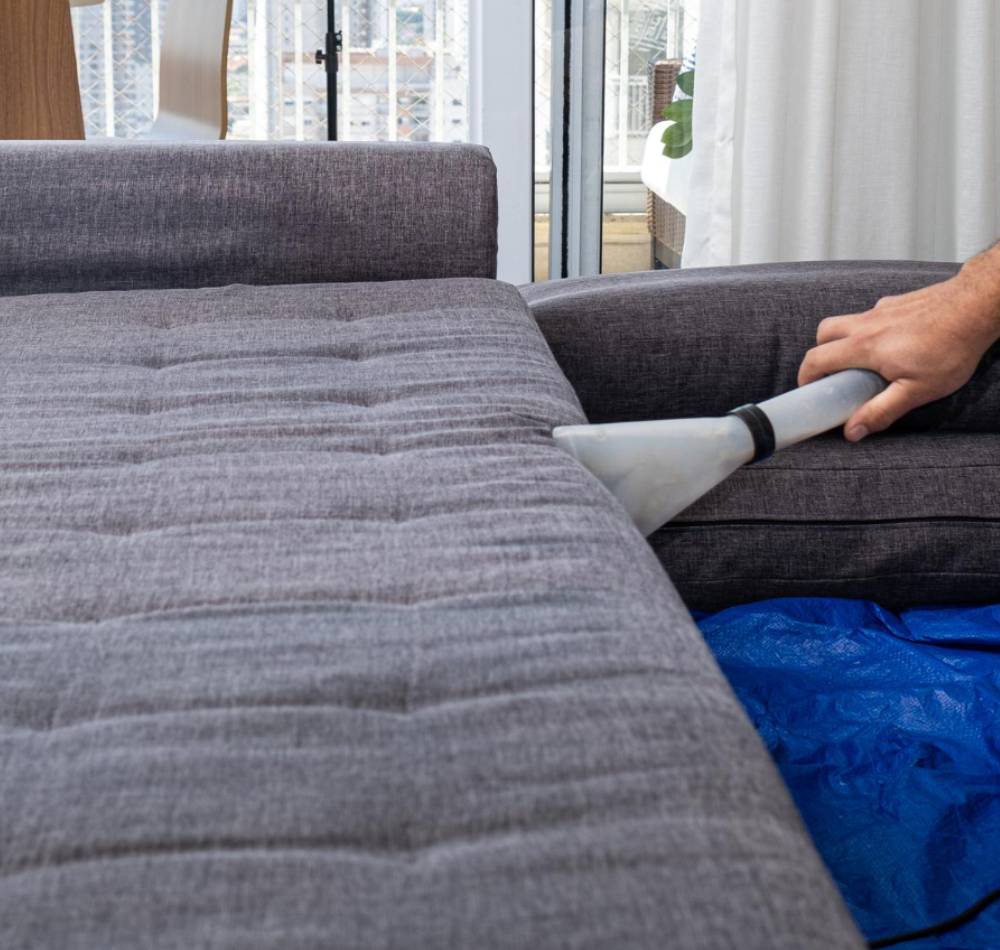
A professional hot water extraction clean works like this: a small, controlled amount of hot water and cleaning solution is injected into the fabric, then immediately vacuumed back out with powerful suction. You get a deep clean with the moisture removed — not left sitting in the foam.
Just as importantly, a trained technician will:
- Identify your fabric code and match the method to the material
- Pre-test every cleaner before full application
- Use low-moisture or solvent-based methods for delicate S, X, velvet, and silk fabrics
- Control the drying process so you avoid rings, browning, and mildew
The same care that protects carpets applies to upholstery — if you found our carpet care checklist for busy families in Ames helpful, the same logic of “right method, right material” keeps your couch looking new for years.
Professional Couch Cleaning vs. DIY: The Real Cost
Cost is usually what makes people lean toward DIY. So let’s look at the actual numbers.
| Option | Typical cost |
|---|---|
| DIY supplies | $20 – $50 |
| Professional couch cleaning | $120 – $250 |
| Repairing or replacing a damaged couch | $1,800 – $3,200+ |
Professional couch cleaning costs more upfront than a bottle of cleaner — but compared to re-upholstering or replacing a ruined sofa, it is inexpensive insurance.
One money-saving tip: most cleaners have a minimum service fee, so it pays to have several pieces done in one visit. Many Ames homeowners book their couch, chairs, and mattress together. (Curious why mattresses matter too? Our guide on mattress vs. carpet cleaning and why both matter in your Ames home explains the connection.)
When to DIY and When to Call a Pro
Here is a simple rule of thumb:
- DIY is fine for light, recent stains on a clearly marked W-code fabric.
- Call a professional for S or X codes, set-in or large stains, pet odors, velvet or silk fabrics, or any couch with a missing tag.
When in doubt, vacuum the couch and book a professional. It costs far less than guessing wrong. For couches with S/X-code or delicate fabric, our professional couch and upholstery cleaning in Ames is the safe choice.
Get Your Couch Cleaned the Right Way
Your couch is one of the most-used pieces of furniture in your home — and one of the most expensive to replace. Professional upholstery cleaning protects that investment, removes deep-set dirt and allergens, and leaves your living room genuinely fresh.
At A-1 Carpet Cleaning, we clean couches, sofas, sectionals, and chairs using fabric-safe methods matched to your upholstery — so you get a deep clean without the risk.
📍 Serving Ames, Iowa & surrounding areas 📞 Call A-1 Carpet Cleaning: 515-432-7500 🌐 https://a-1-carpetcleaning.com/
This article is for general guidance. Always check your furniture’s care tag and, when unsure, consult a professional upholstery cleaner.