

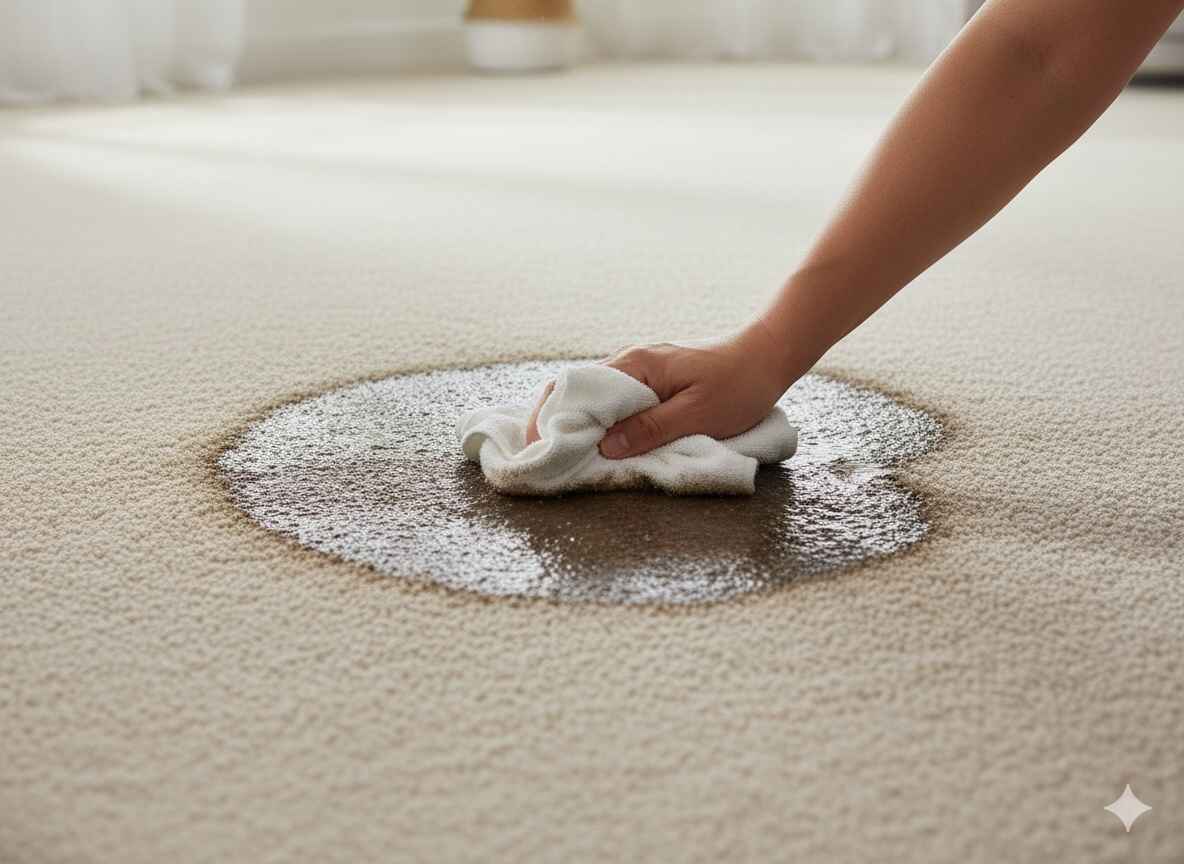
A burst pipe, a washing machine that overflowed, a sump pump that quit during an Ames spring thaw. Wet carpet usually means a bad day, but acting in the first day or two can often save the carpet.
Below: how to dry it step by step, how to tell if the pad is the real problem, and when to hand it to a pro.
Short answer: Make the area safe and stop the water source, remove standing water with a wet and dry shop vac or towels, then run fans and a dehumidifier. The goal is to get the carpet, pad, and subfloor dry within 24 to 48 hours, because the longer they stay wet, the higher the mold risk.
This works best when the water was clean and you caught it early. If the water came from a sewage backup or flood, or the carpet is still damp after two days, call a professional.
First: Where Did the Water Come From?
Before you start, figure out the source. It decides whether drying it yourself is safe.
| Water source | Examples | DIY drying? |
|---|---|---|
| Clean water | Broken supply line, overflowing sink or tub, melted ice, a leaking water heater | Usually yes, if you act fast |
| Dirty (gray) water | Washing machine or dishwasher overflow | Best handled by a pro. Only consider DIY for a very small area you can dry fully within a day or two, and plan to remove the pad |
| Contaminated water | Sewage backup, toilet overflow with waste, outdoor flood water | No. Call a professional and keep kids and pets away |
Gray water can get worse the longer it sits, so call early instead of waiting to see how it dries. If you can’t tell which category the water falls into, treat it as gray or worse.
Electrical safety comes first. Water and electricity can be deadly together. If the water is near outlets, cords, appliances, or a breaker panel, or if you’re not sure, stay out of the water. Shut off power only if you can reach the breaker without stepping through water.
If you can’t, call an electrician or your utility. Don’t touch wet outlets, cords, or appliances, and don’t plug in or run a shop vac, fan, or dehumidifier while you or the equipment are standing in or near water. Once the standing water is gone, plug equipment into a GFCI protected outlet and keep cords out of wet areas.
How to Dry a Wet Carpet: Step by Step
- Make it safe and stop the source. Shut off the water at the valve or main, or fix whatever is leaking, so the carpet isn’t getting wetter while you work.
- Document without delaying. Stopping the water and making the area safe always come first, and drying should never wait on an insurance call or an adjuster. Once it’s safe, take quick photos or a short video of the wet area, the source, and any damaged items before you move or throw them out. Most policies expect you to limit further damage, but check yours.
- Remove standing water. Use a wet and dry shop vac if you have one, or soak it up with towels and a mop. Never use a regular household vacuum on a wet floor.
- Clear the room. Move furniture off the carpet. Wood and metal legs can leave stains on wet carpet, so put foil or plastic blocks under any furniture you can’t move.
- Press out moisture. Lay thick dry towels over the wet area and stand on them. Swap them out as they soak up water. Repeat until the towels stay mostly dry.
- Get air moving, but only if the water was clean. Point fans across the surface of the carpet, not straight down. Use several fans if you can. In dry weather, open windows. When it’s humid outside, keep windows closed and use air conditioning instead. Don’t run fans on gray or contaminated water, since they can spread it.
- Run a dehumidifier. Close the door and run a dehumidifier in the room. It pulls moisture out of the air so the carpet and pad can keep releasing water.
- Check the pad and subfloor. The padding soaks up water like a sponge and dries much slower than the carpet on top, and the subfloor underneath has to dry too. See the pad section below for how to take a look.
- Keep checking. Press a dry paper towel or your hand firmly on the carpet. If it feels cool or damp, or you smell mustiness, it isn’t dry yet. A moisture meter, which you can buy at most hardware stores, gives a more reliable answer. Keep the fans and dehumidifier running until it’s completely dry, even deep down.
- Clean once dry, if the water was clean. After clean water, once the carpet is completely dry, a professional cleaning can remove leftover dirt, minerals, and odors. If the water was gray or contaminated, ask a pro about treatment or replacement before any cleaning.
Skip hair dryers and space heaters. They only dry a small patch, they leave the pad underneath wet, and they’re a hazard near water.
How Long Does Wet Carpet Take to Dry?
The usual target is 24 to 48 hours. Professional equipment often gets there, while home fans and a dehumidifier can take longer. Thick pad, a basement, a large area, or damp weather can push it to 72 hours or more. The surface often feels dry long before the pad does, which is why checking underneath matters.
The longer carpet and pad stay wet, the higher the mold risk, and that risk climbs noticeably after the first day or two. Not every wet carpet molds, but a musty smell on day two is a warning sign.
Does the Carpet Pad Need to Be Replaced?
Sometimes. Pad that got wet from clean water and dried quickly can often be kept. Pad usually needs to come out when:
- It stayed wet for more than 48 hours
- It smells musty or sour
- The water came from a dirty source, like a washing machine drain or a sewage backup
- It’s crumbling, stained through, or sticking to the floor
Pad is the cheap part to replace. Mold in the subfloor is not.
To check it, gently pull one corner of the carpet off the tack strips and look underneath. Wear thick gloves, because tack strips are sharp. Don’t force it, and lift only what you need. A carpet that’s been lifted often needs to be re-stretched by a pro afterward. If the pad is soaked or you’re not sure, that’s a good time to call for help.
What About Mold?
Mold on or under wet carpet often shows up as dark or discolored spots and a musty smell. It can hide under carpet even when the top feels dry. If you see or smell it, or the affected area is larger than about 10 square feet, have a professional take a look. Our guide on getting mold out of carpet in Iowa homes and basements covers what to do next.
When to Call a Pro
Drying a small, clean spill is a fair DIY job. Call a professional if:
- The water came from a sewage backup or outdoor flooding
- The water was gray, or you can’t tell what it was
- The carpet is still damp after 48 hours
- You smell mustiness or see discoloration or dark spots
- The wet area is large, or it’s in a basement or over concrete
- The padding is soaked through
- Someone in your home has allergies, asthma, or a weak immune system
- You plan to file an insurance claim (call your insurer, but don’t delay drying while you wait)
Pros remove the water with truck mounted extraction, then use industrial fans and dehumidifiers that dry the carpet and pad faster than home equipment. For the first steps and what to document for insurance, see our guide on what to do when your carpet floods in Ames.
Wet Carpet Help in Ames, Iowa
Doug and Renae have run A-1 Carpet Cleaning in Ames since 2004. When a leak or spill is more than you can handle with towels and fans, we can help get the water out of your carpet and start the drying process, serving Ames and central Iowa. Learn more about our emergency carpet water extraction in Ames service.
Call (515) 432-7500 to talk through your situation.
Frequently Asked Questions
How long does it take for wet carpet to dry?
The target is 24 to 48 hours, which professional equipment often meets. With home fans and a dehumidifier, it can take longer, and thick padding, basements, and humid weather can stretch it to 72 hours or more. Carpet that feels dry on top can still be wet underneath, so check the pad too.
Can wet carpet be saved?
Often, yes, if the water was clean and you remove it quickly. Carpet that dries within about 24 to 48 hours has the best chance. Carpet soaked by sewage or flood water, or left wet for several days, usually can’t be saved safely, and the pad usually needs to go.
Can wet carpet dry on its own?
Sometimes, but it’s a gamble. Without airflow, the pad underneath can stay wet for days, and the longer it stays wet, the higher the mold risk. It’s much safer to remove the water and run fans and a dehumidifier.
Do I have to replace the carpet padding after it gets wet?
Not always. Padding that got wet from clean water and dried quickly can sometimes stay. Padding that stayed wet more than 48 hours, smells musty, or got wet from a dirty source usually needs to be replaced. A pro can check it for you.
Can I use a regular vacuum on wet carpet?
No. A household vacuum isn’t built for water and can damage the motor or shock you. Use a wet and dry shop vac, towels, and a mop to remove standing water.
How do I know if there’s mold under wet carpet?
Look for a musty smell, dark or discolored spots on the carpet or backing, and pad that stays damp after a few days. Mold can hide under carpet even when the top feels dry. If you see or smell it, or the area is larger than about 10 square feet, have a professional assess it.
Is it safe to dry carpet myself after a sewage backup or flood?
No. Water from sewage backups or outdoor flooding can carry bacteria and other contaminants. Keep kids and pets out, and call a professional.