

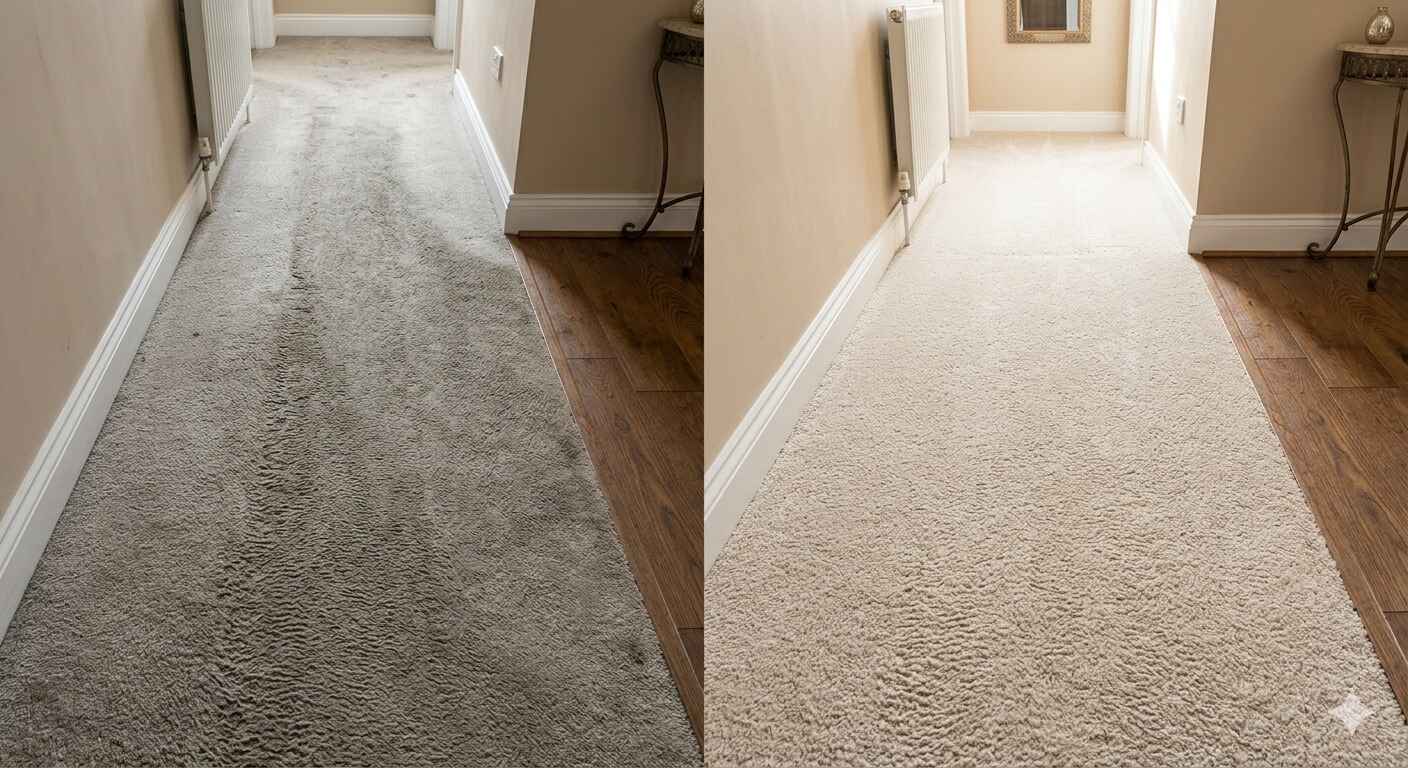
The carpet in your hallway or favorite walking path can start looking darker than the rest of the room, even when you vacuum regularly.
High-traffic carpet areas often darken because of a combination of embedded soil, oily residue, and flattened fibers. Some discoloration can improve with cleaning, while permanent fiber wear may remain.
For homes in Ames and Story County, tracked-in dirt during changing seasons can add to the problem. Here’s how to identify the cause, clean the area safely, and prevent further wear.
What’s Actually Making Your Carpet Turn Dark?
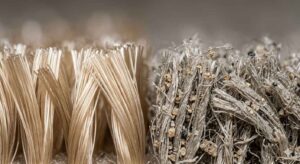
Most people assume it’s just dirt. It’s not that simple.
When you walk the same route every day, four things happen to your carpet fibers:
1. Grit scratches the fibers. Tiny particles of sand and soil act like sandpaper. Every step grinds them deeper. They scratch the fiber surface, and scratched fibers can’t reflect light properly. This is called fiber abrasion. Once it happens, no cleaning fully reverses it.
2. Oils stick to the fibers. Skin oils from bare feet and shoe residue settle deep into the carpet. Oil acts like glue. It grabs onto new soil and holds it in place. That’s why some areas feel dirty again just days after cleaning.
3. Fibers flatten and absorb more light. Constant foot pressure pushes carpet pile flat. Flat fibers absorb light instead of reflecting it. That’s why a freshly vacuumed hallway can still look dull and dark. The fibers physically changed direction.
4. Airborne particles settle in. Air flows through your home all the time. As it passes under doors and along baseboards, your carpet acts like a filter. It catches tiny particles of soot, dust, and cooking vapors. This is called filtration soiling. It adds a thin, stubborn gray layer over time.
These four forces work together to create what carpet pros call traffic lanes. They can start forming within just a few months of moving in.
Why Hallways and Stairs Get Hit the Hardest
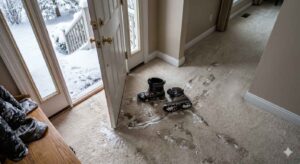
Not all carpet areas darken the same way.
Hallways, stairs, and entryways often show dark traffic lanes first because people repeatedly walk along the same narrow paths. Over time, dirt and grit build up, while constant foot traffic can flatten and wear down carpet fibers.
These darker areas may stand out against nearby carpet that receives less use. Even after vacuuming, flattened or worn fibers can make a walking path look darker.
In Ames, changing seasons can make these areas harder to maintain. Winter footwear may carry grit and de-icing residue indoors, while spring mud and everyday foot traffic add more soil.
Entry mats, regular vacuuming, and prompt attention to spills can help limit buildup. Dark lines along baseboards may also result from filtration soiling, which occurs when air movement deposits fine particles into carpet fibers.
Does Carpet Type Make a Difference?
Yes, significantly. Here’s a quick comparison:
| Carpet fiber | What homeowners should know |
|---|---|
| Nylon | Often resilient under foot traffic, although carpet construction and quality matter |
| Polyester | Can resist many stains, but some constructions may flatten in busy areas |
| Wool | Naturally resilient, but requires suitable cleaning methods and maintenance |
The fiber type is only part of the picture. Carpet density, pile height, construction, and regular maintenance all affect how well carpet holds its appearance.
Carpet color also affects how visible traffic lanes become. Light-colored carpets may show tracked-in dirt more easily, while very dark carpets can reveal lint and light-colored debris. Medium or patterned shades may help hide everyday soil, although regular cleaning is still important. Before choosing a new carpet, consider foot traffic, fiber durability, and the manufacturer’s care recommendations.
7 Simple Habits That Slow Down Carpet Darkening
You can’t stop people from walking. But you can reduce the damage with these habits:
1. Vacuum high-traffic areas 3 to 4 times per week when needed. Busy hallways and entryways collect dirt faster than lightly used rooms. Make slow, overlapping passes to remove loose grit before it becomes embedded in the fibers. Adjust the frequency based on household activity and your carpet’s care instructions.
2. Use a two-mat entry system. Put a coarse scraper mat outside your front door. Add an absorbent mat just inside. This catches most tracked-in soil before it ever reaches your carpet.

3. Keep outdoor dirt off your carpet. Shoes can bring grit, moisture, and residue into your home, especially during Ames winters and muddy spring weather. Leaving outdoor shoes near the entrance can help reduce dirt buildup in busy carpeted areas. If you wear slippers indoors, keep their soles clean and check for marks on light-colored carpets.

4. Lay runners in your main traffic paths. A hallway or stair runner takes the daily beating instead of your carpet. Rotate or replace it periodically to spread wear more evenly.
5. Rotate area rugs every 6–12 months. No single carpet section should carry all the foot traffic. Rotating your rugs shifts the wear pattern before it becomes permanent.
6. Check whether gentle carpet grooming is appropriate. Some carpets may benefit from gentle pile grooming to improve their appearance. However, carpet rakes are not suitable for every carpet type, and permanent fiber crushing cannot always be reversed. Follow the manufacturer’s care instructions.
7. Ask whether carpet protection is appropriate. A compatible carpet protector may help certain fibers resist spills and make spot cleanup easier. However, not every carpet needs additional protection. Check the manufacturer’s recommendations before applying any product.
For a full day-to-day routine, check out the Weekly Carpet Maintenance Tips for Busy Ames Families from A-1 Carpet Cleaning.
How Do You Clean High-Traffic Areas of Carpet?
Dark walking paths in carpet are often caused by a combination of trapped dirt, oily residue, and flattened fibers. Cleaning may improve their appearance, but permanent wear cannot always be reversed.
Short answer: Start with a thorough vacuum, check the carpet’s care instructions, treat individual spots with a compatible product, and avoid soaking or scrubbing the fibers. If the area stays dark after cleaning, professional carpet cleaning may help remove embedded soil.
1. Vacuum the area slowly. Make several overlapping passes along the walking path. This helps remove loose grit before you use any moisture or cleaning solution.
2. Check the carpet material and care instructions. Different fibers and carpet constructions need different care. Test any suitable cleaning product in a hidden area first.
3. Treat individual spots, not the entire traffic lane with random chemicals. Blot spills with a clean white cloth. Use a carpet-compatible spot cleaner according to its label, and avoid aggressive scrubbing.
4. Avoid over-wetting the carpet. Too much water or detergent can leave residue or create drying problems. Follow the equipment and product instructions if using a home carpet cleaner.
5. Check the results after the carpet dries. If the dark area remains, look closely at the fibers. Remaining soil may respond to professional cleaning, but flattened or abraded fibers may continue to look darker even when clean.
Can You Fix Dark Traffic Lanes Yourself?
A rental carpet cleaner may help improve dark traffic lanes when the discoloration comes mainly from accumulated dirt. However, the results depend on the carpet material, machine, cleaning products, and how the equipment is used.
Using too much detergent or water can cause problems. Leftover cleaning solution may attract additional soil, while excessive moisture can make drying more difficult.
Follow the machine instructions, use products suitable for your carpet, and avoid repeated cleaning when an area isn’t improving. If the carpet stays dark after drying, professional cleaning may help determine whether the problem is embedded dirt or permanent fiber wear.
Before using a store-bought product on a stubborn spot, check our Spot Removal Guide for carpet care precautions.
What Professional Cleaning Actually Does Differently
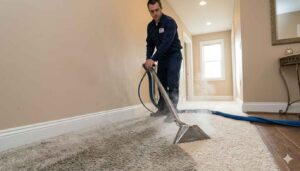
Professional hot water extraction, often called steam cleaning, can help remove dirt, oily residue, and grit that regular vacuuming may leave behind.
The process uses water, suitable cleaning solutions, and extraction equipment to loosen and remove accumulated soil from carpet fibers. Professional equipment can be especially helpful in busy hallways and living areas where dirt has built up over time.
A-1 Carpet Cleaning uses truck-mounted hot water extraction and the Rotovac 360i. Its rotating cleaning head makes repeated passes over suitable carpet, helping loosen and extract embedded dirt. The cleaning method depends on the carpet’s material, condition, and level of soiling.
Professional cleaning may improve the appearance of dark traffic lanes, but results vary. If carpet fibers are permanently flattened, scratched, or worn, cleaning cannot fully restore them to their original condition.
When Should You Call a Professional?
For many households, professional carpet cleaning every 12 to 18 months is a useful starting point. Busy homes with children, pets, or heavy foot traffic may need cleaning more often. Follow your carpet manufacturer’s maintenance recommendations and consider the condition of your carpet when deciding.
Don’t wait for the carpet to look visibly bad. Look for these signs it’s time to book:
- Dark patches that stay dark even after vacuuming
- Carpet that feels sticky underfoot between cleans
- Lingering odors in walking areas
- Matting that pile grooming doesn’t fix
If you prefer non-toxic treatments especially with young children or pets A-1 Carpet Cleaning offers green cleaning options for Ames residents that work just as well.
The Short Version
Dark traffic lanes happen for three reasons: grit scratches the fibers, oils glue new soil in place, and compression changes how your carpet reflects light. All three compound each other over time.
The most important things you can do right now:
- Vacuum high-traffic areas more often
- Set up a two-mat entry system
- Schedule a professional deep clean before damage becomes permanent
The longer you wait, the less reversible it becomes.
Frequently Asked Questions About High-Traffic Carpet
How do you clean high-traffic areas of carpet?
Begin by vacuuming slowly to remove loose dirt and grit. Treat individual spots with carpet-compatible products and avoid over-wetting or aggressive scrubbing. If dark traffic lanes remain after cleaning, professional hot water extraction may help remove embedded soil.
Can dark traffic lanes in carpet be restored?
Sometimes. If a high-traffic carpet area looks dark because of embedded soil, thorough vacuuming and suitable cleaning may improve its appearance. Professional cleaning may also help remove stubborn buildup.
However, if the fibers are permanently flattened, abraded, or discolored, cleaning cannot fully restore their original condition.
Why does my carpet still look dark after vacuuming?
Vacuuming removes loose soil, but it may not remove oily residue or deeply embedded dirt. In some cases, the dark appearance comes from flattened or damaged fibers rather than dirt alone.
How do you fix matted carpet in high-traffic areas?
Regular vacuuming may help lift some compressed fibers. A carpet rake may be appropriate for certain carpet types, but check the manufacturer’s instructions first. Permanent crushing or fiber damage cannot always be repaired through cleaning.
How often should high-traffic carpet areas be vacuumed?
High-traffic areas usually need more frequent vacuuming than lightly used rooms. The Carpet and Rug Institute recommends regular vacuuming and adjusting frequency to foot traffic. Homes with pets or frequent visitors may need extra attention.
High-traffic carpet can also be professionally cleaned when needed, but the cleaning method and frequency should follow the carpet manufacturer’s recommendations.
Does professional carpet cleaning remove all traffic lane discoloration?
No. Professional cleaning may remove accumulated dirt and some residues, but it cannot guarantee restoration where the carpet has permanent staining, abrasion, or fiber damage.
Are dark lines along carpet edges the same as traffic lanes?
Not always. Dark lines along baseboards or under doors may result from filtration soiling, where fine airborne particles collect in the carpet. Traffic lanes are more commonly caused by repeated walking, soil buildup, and fiber compression.
Ready to Restore Your Carpet?
A-1 Carpet Cleaning helps homeowners in Ames and Story County tackle dirt buildup and dark traffic lanes with professional carpet cleaning.
Not sure whether your carpet needs cleaning or has permanent wear? We’re happy to discuss your concerns and explain what results may be possible.
Call (515) 432-7500 to discuss your carpet cleaning needs and request a quote.
Learn more about our professional carpet cleaning services in Ames.