

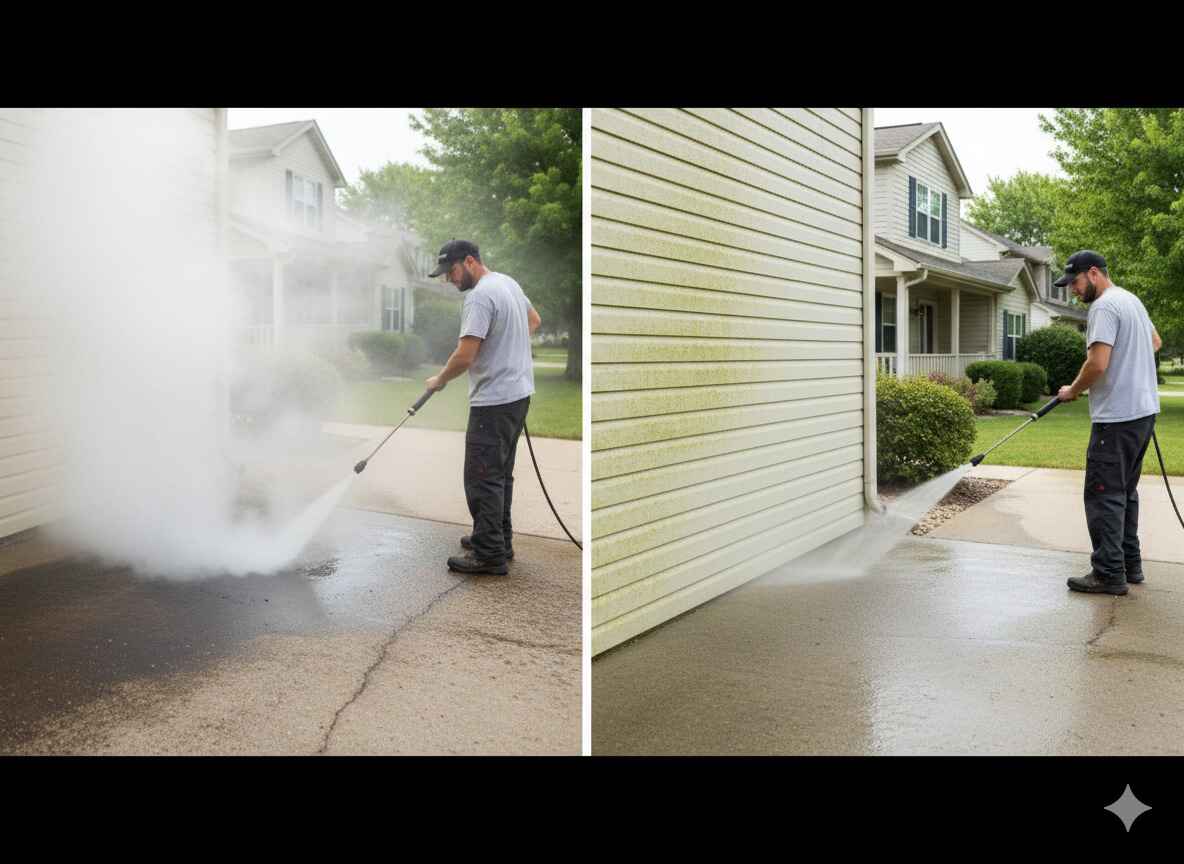
A clean driveway does a lot for how your whole home looks, but concrete is porous, so oil, rust, and grime sink in and stick around. The good news is that most driveways come clean with a few simple steps and a little patience, and you do not always need a pressure washer to do it. Here is how to clean a concrete driveway the right way, how to handle the two toughest stains (oil and rust), and when power washing is actually worth it.
Short answer: Sweep the driveway, pre-wet it, apply a concrete degreaser or a dish soap solution, scrub with a stiff brush, and rinse. Treat oil and rust stains separately before the final rinse. Power washing helps most as a finishing step, after the stains are already broken down.
How to Clean a Concrete Driveway: Step by Step
- Clear the surface. Sweep away leaves, dirt, and debris, and move cars, planters, and anything else off the driveway.
- Protect what is nearby. Wet down or cover plants, and be mindful of painted siding, the garage door, and windows.
- Pre-wet the concrete. Rinse the driveway with a garden hose so the cleaner spreads evenly instead of soaking straight in.
- Apply a cleaner. Use a concrete degreaser or a mix of warm water and dish soap. For a large area, a stiff push broom helps you spread it.
- Scrub. Work the cleaner into the surface with a stiff bristle brush, paying extra attention to stained spots.
- Rinse. Rinse thoroughly with a hose or pressure washer until the water runs clear, then let it dry.
For general grime, this is often all you need. Stubborn stains get their own treatment below.
How to Remove Oil Stains From Concrete
Oil is the most common driveway stain, and it bonds with the concrete once it soaks in, so a surface wipe will not cut it.
- Fresh spills: cover the oil with cat litter, baking soda, or cornstarch to soak up the excess, let it sit a few hours, then sweep it up.
- Then scrub: apply a concrete degreaser or a dish soap paste, scrub with a stiff brush, and rinse.
- Set-in stains: make a baking soda paste about the thickness of toothpaste, spread it over the stain, let it sit at least thirty minutes, then scrub and rinse. A concrete-safe degreaser works even better on old stains.
- Be patient: deep stains rarely lift in one try. Repeating the treatment two or three times over a few days pulls out more oil each time.
How to Remove Rust Stains From Concrete
Rust from tools, furniture, or fertilizer needs to be dissolved, not scrubbed off.
- Light rust: pour lemon juice or white vinegar on the stain, let it sit a few minutes, add a little salt or baking soda, then scrub with a stiff brush and rinse.
- Tougher rust: a commercial rust remover made for concrete works well. Follow the label, wear gloves and eye protection, and rinse thoroughly.
- Go easy on harsh acids: muriatic acid can remove rust, but it is harsh and dangerous and can etch the concrete if misused, so save it as a last resort and dilute it carefully.
What About Mold and Mildew?
Driveways in shady, damp spots (common on the north side of a house) can grow green or black mold and mildew. Scrub the area with a mold-killing detergent, or a mix of about one cup of bleach per gallon of water, then rinse well. In Iowa’s humid summers, this is worth checking for every year.
When Should You Power Wash a Driveway?
Here is the part most guides get wrong: a pressure washer is not a stain remover on its own. Blasting raw pressure at an oil or rust stain usually will not lift it, and it can damage the surface. Power washing works best as the finishing step, after a degreaser or cleaner has already broken the stain down. Used that way, it rinses the loosened grime away fast and makes the whole driveway look new. It is a great tool for a large driveway or a yearly deep clean. If you are planning one, our guide on the best time for power washing in Central Iowa can help you time it right.
Common Mistakes That Damage Concrete
A few habits do more harm than the stain they are meant to fix:
- Using too much pressure or holding the nozzle too close, which can etch the concrete or dislodge the mortar in the joints
- Going straight to the highest setting without testing a small, hidden spot first
- Using undiluted bleach or strong acids, which can leave permanent marks
- Skipping the degreaser and relying on pressure alone to shift an oil stain
When in doubt, start gentle and work up.
Should You Seal Your Driveway After Cleaning?
Once your driveway is clean and fully dry, a concrete sealer is worth considering. It helps repel oil, water, and stains, makes the next cleaning easier, and protects the surface from Iowa’s freeze and thaw cycles. Reseal every couple of years for the best protection.
When to Call a Pro in Ames
DIY works for most everyday cleaning, but a pro is the safer choice when:
- The driveway is large and would take hours by hand
- Stains are deep set and will not lift on their own
- You do not have a pressure washer, or want to avoid the risk of etching the concrete
A-1 Carpet Cleaning has served Ames and Story County since 2004, and along with our indoor services we offer power washing in Ames for driveways, patios, and more, done at the right pressure so your concrete comes clean without damage. Call us at 515-432-7500 for a free quote.
Frequently Asked Questions
What is the best thing to clean a concrete driveway with?
A concrete degreaser, or a mix of warm water and dish soap, handles most grime. Scrub with a stiff brush and rinse. Save stronger cleaners for specific stains like oil or rust.
How do you get oil stains out of a concrete driveway?
Soak up fresh oil with cat litter or baking soda, then scrub the spot with a degreaser or a baking soda paste and rinse. Old stains may need a few rounds to lift fully.
Can you pressure wash a concrete driveway?
Yes, but use it as a rinsing step after treating stains, and keep the pressure moderate. Too much pressure held too close can etch the surface.
How do you remove rust from concrete?
Use lemon juice or vinegar with a little salt for light rust, or a concrete rust remover for tougher stains. Rinse well and wear gloves with any acidic cleaner.
How often should you clean your driveway?
A good general clean once a year keeps it looking sharp, plus spot cleaning spills as they happen so they do not set in.