

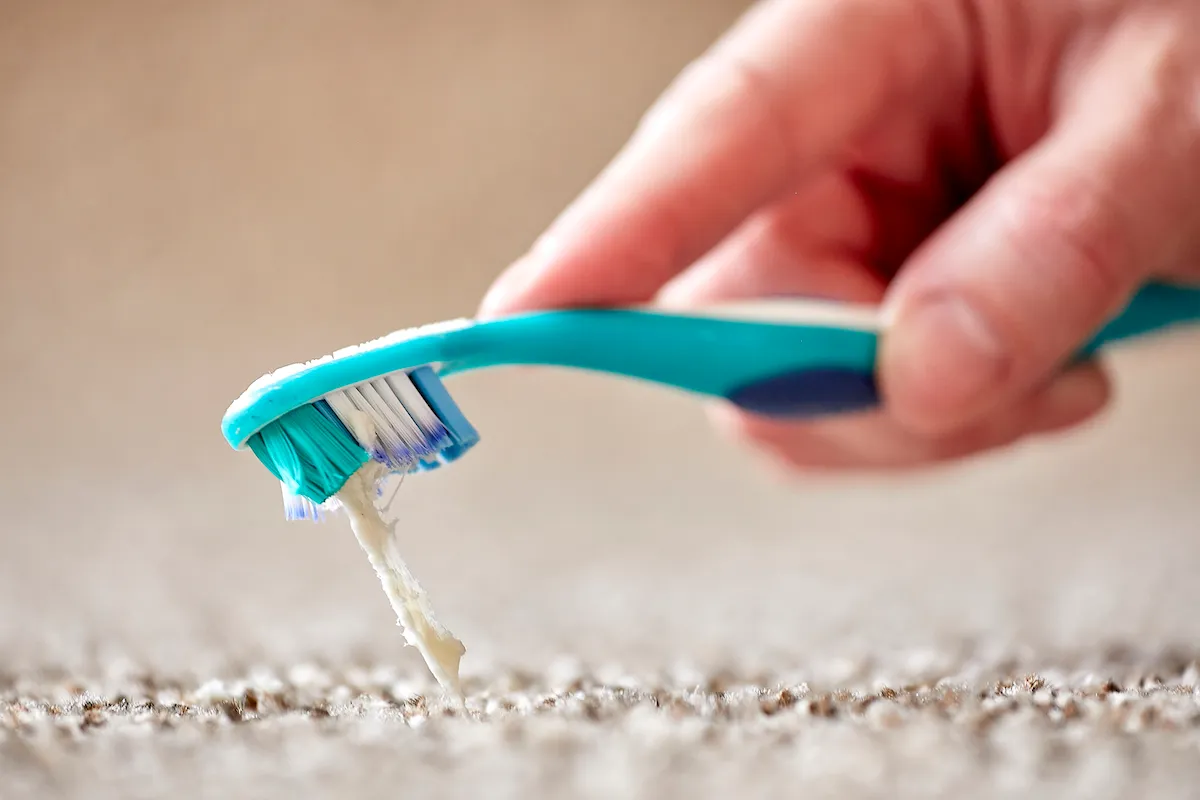
A candle tipped over, a kid left gum behind, or a pen leaked in the laundry basket. These stains look like disasters, but many of them come out of carpet with a few basic supplies. If you’re an Ames homeowner staring at one right now, you can often handle it yourself, as long as you go slowly and know when to stop.
Short answer: Harden wax or gum with ice and scrape off what you can. Then lift what’s left with a method that suits your carpet: wax with a clean white absorbent cloth (using low heat only if your carpet’s manufacturer guidance allows it), and gum with a carpet-safe adhesive remover.
Ink depends on the type. Water-based ink often lifts with a weak mix of mild dish soap and cool water, while ballpoint and permanent marker may need a tested carpet-safe spot remover or solvent treatment. Blot, never rub, and call a professional if the stain is big, old, or on wool or delicate carpet.
Before You Start: Three Rules
- Test first. Try any product on a hidden spot, like inside a closet, before you use it on the stain.
- Blot, don’t rub. Rubbing spreads ink and grinds wax and gum deeper into the fibers.
- Work from the outside in. This keeps the stain from spreading outward as you clean.
| Solvent and backing warning
Rubbing alcohol, acetone, nail polish remover and many spot removers are solvents. They can pull dye out of carpet, damage some synthetic fibers, and dissolve the latex or adhesive backing if they soak through. Put a small amount on a white cloth, never directly on the carpet. Don’t saturate the area, always test a hidden spot first, and skip acetone and nail polish remover entirely. If your carpet is wool, silk, or a fiber you don’t recognize, skip solvents and call a pro. Alcohol is also flammable, so keep it away from flames and open a window. |
You’ll need a few basics: ice in a bag, a spoon or dull knife, clean white absorbent cloths, mild dish soap, a vacuum, and a carpet-safe adhesive or spot remover. In this guide, rubbing alcohol appears only as one possible option for ballpoint ink, and only after a hidden spot test.
How to Get Wax Out of Carpet
Candle wax is the easiest of the three if you don’t smear it.
- Hold an ice pack on the wax for a few minutes until it’s hard.
- Break it up gently with a spoon or dull knife, working along the fibers rather than against them, especially on loop or berber carpet. Lift the pieces off and vacuum the crumbs.
- Press a clean white absorbent cloth firmly over the remaining wax to lift what you can.
- Heat is optional and depends on your carpet. Only if the manufacturer’s care guidance allows heat and you know the fiber, set an iron on the lowest heat, no steam, and press it over the cloth for a few seconds at a time. Lift often and move to a clean part of the cloth. If you don’t know the fiber or can’t find guidance, skip the iron.
- If a waxy residue stays behind, test a carpet-safe spot remover on a hidden spot, then dab a small amount on a white cloth.
- If a colored mark is left behind, dab with a very weak mix of dish soap and cool water (a drop or two per cup), then blot with a cloth dampened with plain water to rinse. Press dry and let the spot dry fully before trying anything stronger. Deep or dark candle colors can leave a faint mark that won’t fully lift.
A caution on the iron: heat can melt some synthetic carpet fibers and can damage wool or delicate carpet. If you’re unsure, stick with the ice, scrape and cloth steps and call a pro for the rest.
How to Get Gum Out of Carpet
- Hold an ice pack on the gum for several minutes until it’s hard and brittle.
- Chip it off with a spoon or dull knife, pulling it up and away from the fibers.
- For sticky leftovers, use a carpet-safe adhesive or gum remover. Check that the label says it’s safe for carpet, test a hidden spot, and put a small amount on a white cloth, not on the carpet.
- Dab the sticky spot, following the product directions, and move to a clean part of the cloth as it picks up residue.
- Rinse by blotting with a clean damp cloth, then press a dry cloth on the spot to take up moisture.
Skip the heat on gum. Warm gum gets stickier and spreads into more fibers.
How to Get Ink Out of Carpet
Ink is the trickiest because it spreads fast and sets as it dries. Act quickly, and check the pen or marker label first, because the right method depends on the type of ink.
Water-based or washable ink
- Blot up any wet ink with a dry white cloth. Don’t rub.
- Mix just a drop or two of mild dish soap into a cup of cool water. Keep it deliberately weak, because extra detergent is harder to rinse out and can leave a residue that attracts dirt. Dab the stain with a white cloth from the outside edge toward the center, switching to a clean part as ink transfers.
- Rinse by blotting with a cloth dampened with plain water, repeating until no suds or soapy feel remain, then press dry.
Ballpoint ink
- Blot up any wet ink with a dry white cloth. Don’t rub.
- Test a hidden spot, then put a small amount of rubbing alcohol or a carpet-safe spot remover on a clean white cloth, not on the carpet.
- Dab from the outside edge toward the center. As ink moves onto the cloth, switch to a clean part.
- When the stain stops lifting, blot with a cloth dampened with plain water, then press dry.
Gel and rollerball inks can behave differently from ballpoint, so go slowly and check the cloth often.
Permanent marker
Permanent marker is the hardest ink to remove, and it often can’t be fully removed at home.
- Blot up any wet marker with a dry white cloth. Don’t rub.
- Test a carpet-safe spot remover made for ink or marker on a hidden spot. Follow the label.
- Use a small amount on a white cloth and dab from the outside in, switching to a clean part each time.
- Keep going only while ink is still transferring onto the cloth. As soon as the cloth stops picking up ink, stop. Repeated treatment after the ink stops transferring can spread dissolved pigment or affect the carpet’s color or fibers, so call a professional if a mark remains.
Quick Reference: What to Use
| Stain | Start with | Avoid |
|---|---|---|
| Candle wax | Ice, scrape, then a white absorbent cloth. Low heat only if your carpet’s guidance allows it | Heat on unknown fiber, wool or delicate carpet |
| Gum | Ice, scrape, then a carpet-safe adhesive or gum remover | Heat, rubbing, acetone or nail polish remover |
| Water-based or washable ink | A weak mix of mild dish soap and cool water, blotted and rinsed | Rubbing, hot water, extra soap |
| Ballpoint ink | Tested rubbing alcohol or carpet-safe spot remover on a white cloth, blotted | Pouring, soaking, rubbing |
| Permanent marker | Tested carpet-safe spot remover for ink, only while ink still transfers to the cloth | Scrubbing, acetone, expecting a full fix |
| Any of the three | A hidden spot test first | Soaking the carpet, colored cloths |
When to Call a Pro
Home methods work well on small, fresh stains. Call a professional when:
- The stain is large, old, or already set in
- You have wool, silk, or other delicate carpet
- The color is lifting from your carpet while you clean
- A ring or sticky residue stays behind after a few tries
- It’s permanent marker that isn’t fading
- You don’t know the fiber type and are worried about heat or solvents
A professional has fiber safe spotting products and the equipment to pull residue out of deep in the carpet. No one can promise every stain will come out, especially old ink, but a pro has far more options than a bottle of rubbing alcohol. For more stain removal tips, see our guide on removing blood, vomit and makeup stains from carpet.
Stain Removal Help in Ames, Iowa
Doug and Renae have run A-1 Carpet Cleaning in Ames since 2004. If a wax, gum or ink stain won’t budge, we can help with professional spotting and truck mounted cleaning, serving Ames and Story County. See our carpet cleaning in Ames, Iowa services or call (515) 432-7500 for a quote.
Frequently Asked Questions
How do you get candle wax out of carpet?
Harden the wax with an ice pack, break it up and scrape off what you can, then press a clean white absorbent cloth over the spot to lift what’s left. Heat from a low iron over the cloth can help, but only if your carpet’s manufacturer guidance allows heat and you know the fiber, since heat can melt some synthetic fibers. If you’re unsure, test a carpet-safe spot remover instead or call a professional.
Does ice really get gum out of carpet?
Yes. Cold makes gum hard and brittle so it breaks away from the fibers. Hold an ice pack on it for several minutes, then chip it off with a spoon or dull knife, working along the fibers. For sticky leftovers, use a carpet-safe adhesive or gum remover on a white cloth, following the label and testing a hidden spot first.
Will rubbing alcohol damage my carpet?
It can. Rubbing alcohol and other solvents can pull dye out of some carpets, harm certain fibers, especially wool, and dissolve the latex or adhesive backing if they soak through. Test a hidden spot first, put a small amount on a white cloth instead of the carpet, blot rather than rub, and keep it away from flames because it’s flammable.
Can you use an iron on carpet?
Only if the manufacturer’s care guidance allows it and you know the fiber. Use the lowest setting with no steam, keep a white cloth between the iron and the carpet, and lift often to check. Skip it on wool, delicate carpet, or any carpet where you’re unsure of the fiber, because heat can melt some synthetic fibers.
How do you get permanent marker out of carpet?
Permanent marker is one of the hardest ink stains to remove, and it may not come out completely. Test a carpet-safe spot remover made for ink on a hidden area, then dab with a white cloth from the outside in. Continue only while ink is clearly transferring to the cloth. If transfer stops and a mark remains, stop rather than repeatedly adding cleaner and call a professional.
Can old, dried ink come out of carpet?
Sometimes. Fresh ink is much easier. Dried or set in ink may lighten with careful dabbing, but repeated scrubbing can spread it or fade the carpet, so a professional is the safer choice for old stains.