

How to Remove Red Wine, Coffee & Common Tough Carpet Stains
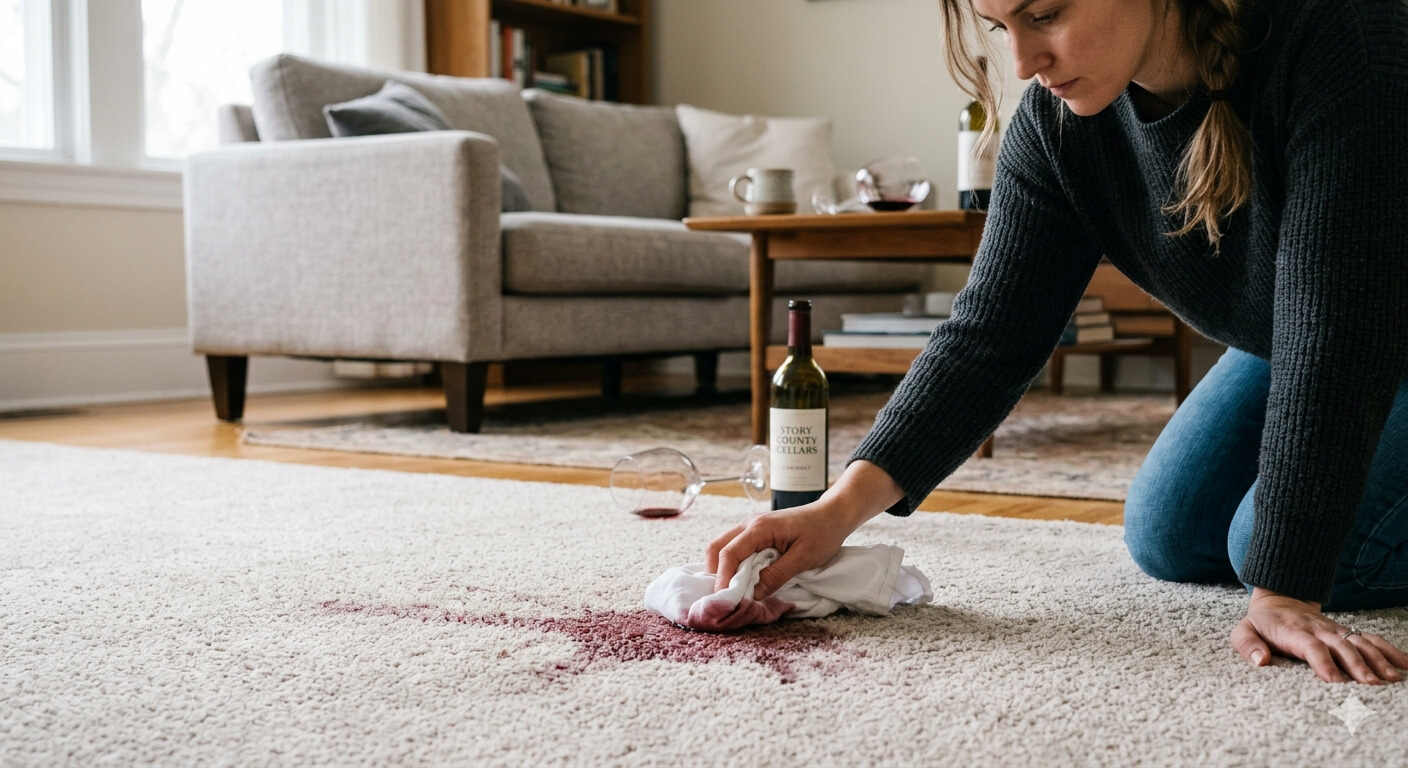
Spilled red wine on the carpet? Don’t panic and whatever you do, don’t grab a cloth and start scrubbing. The way you respond in the next 60 seconds will determine whether that stain comes out completely or becomes a permanent fixture in your living room.
Here’s the good news: most carpet stains red wine, coffee, mud, grease, even pet accident are fully removable if you know the right technique. This guide walks you through exactly what to do, step by step, so you can handle the situation confidently without making things worse.
Act Fast The First 60 Seconds Are Everything
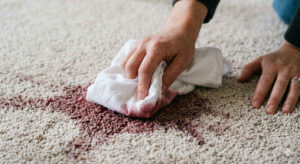
Every stain follows the same rule: the longer it sits, the deeper it bonds with carpet fibers. Red wine is especially aggressive because it contains tannins and anthocyanins natural pigments that attach to carpet fibers within minutes of contact. Coffee is similar. Waiting even 15–20 minutes makes a noticeable difference.
The moment a spill happens, do these three things immediately:
- Blot don’t rub with a clean white cloth. Rubbing spreads the stain and damages fibers.
- Work from the outer edge inward to prevent the stain from spreading further.
- Use cold water only. Hot water sets most stains permanently by bonding the pigment to fibers.
That’s your emergency response. Everything else the solutions, the methods comes after this first blotting step.
How to Remove Red Wine Stains from Carpet (Step-by-Step)
Fresh Red Wine Spill Within the First Hour
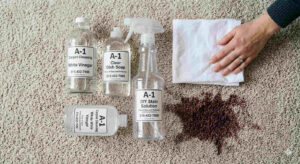
The vinegar and dish soap method is the most reliable solution you can make from ingredients you already have at home. Mix together:
- 2 cups cold water
- 1 tablespoon white vinegar (plain white other types can leave marks)
- 1 tablespoon clear liquid dish soap
⚠️ Pro tip: Use a clear dish soap with no bleach, optical brighteners, or strong dyes. Many homeowners grab whatever is sitting by the sink but soaps with bleach agents or added dyes can permanently strip color right out of your carpet fibers.
Apply the solution to the stain and blot with a clean white cloth. Don’t pour dab and press gently. Repeat until the stain stops transferring to the cloth. Rinse lightly with cold water and blot dry. If you can still see a faint shadow, sprinkle baking soda over the damp spot, leave it for an hour, then vacuum it up. That usually takes care of the rest.
For light or cream-colored carpets, a mixture of 3% hydrogen peroxide and a small drop of dish soap can work even faster. Just be sure to patch-test a hidden area first hydrogen peroxide can lighten some carpet colors.
Dried or Set-In Red Wine Stains
Dried wine stains require a bit more patience, but they’re still treatable. Start by rehydrating the stain with a small amount of cold water. This softens the dried pigment so it can be lifted. Then apply the vinegar and dish soap solution two or three times, blotting between each application.
For stains more than 24 hours old, a commercial OXY-based cleaner like Folex or BISSELL OXYgen Boost is usually more effective than home remedies. If the stain has truly set and nothing is working, it’s time to call in a professional trying too many DIY methods at that point can damage the carpet fibers further. More on that below.
How to Remove Coffee Stains from Carpet
Coffee stains are generally easier to remove than red wine, but they become more stubborn once dry especially if your coffee had milk or sugar in it.
For a fresh coffee spill, blot up as much liquid as possible first. Then apply the same white vinegar and dish soap solution described above. Work it gently into the stain, blot clean, and rinse with cold water. That usually does the job.
If your coffee had milk in it, add one extra step before the vinegar solution: mix one capful of enzyme-based laundry detergent into a cup of warm water and apply that first. Milk contains proteins that regular dish soap doesn’t break down effectively the enzyme detergent handles those before you treat the actual discoloration.
For dried coffee stains, rehydrate the area with a little warm water, then apply a baking soda paste (three parts baking soda to one part water). Let it sit for about an hour, vacuum the residue, then follow up with your vinegar solution for any lingering discoloration.
Other Common Tough Carpet Stains Quick Reference
Red wine and coffee get the most attention, but plenty of other stains end up on carpets. Here’s a fast reference for the most common ones then we’ll cover each in a little more detail below.
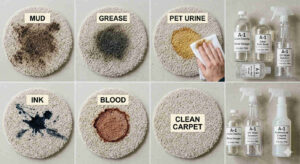
| Stain Type | Emergency Action | Best Solution |
|---|---|---|
| Red Wine | Blot outside-in immediately | White vinegar + clear dish soap + cold water |
| Coffee (Black) | Blot up liquid first | Baking soda paste + vinegar solution |
| Coffee with Milk | Blot, then enzyme cleaner first | Enzyme detergent, then vinegar solution |
| Pet Urine | Blot and flush with cold water | Enzyme-based cleaner only |
| Grease / Oil | Absorb with dry material | Cornstarch or baking soda first |
| Mud / Dirt | Do not touch until fully dry | Vacuum first, then mild dish soap solution |
| Ink | Blot with rubbing alcohol | No water alcohol only |
| Blood | Blot with cold water only | Enzyme cleaner never hot water |
Here’s a bit more detail on each:
- Pet urine: Cold water and an enzyme-based cleaner is the only thing that truly eliminates both the stain and the odor. Avoid hot water it permanently bonds ammonia to carpet fibers. See how professionals handle pet urine in carpet padding →
- Mud: Let it dry completely before you touch it. Once dry, vacuum up the loose dirt, then treat with dish soap and water.
📍 Ames Spring Tip: With the 2026 spring thaw in full swing across Story County, mud is the number one carpet emergency we’re seeing right now and it often comes with a salt and grit mix tracked in from driveways and sidewalks.
The most important thing to remember: let the mud dry completely before you do anything. Trying to clean wet Iowa mud just pushes liquid soil deeper into the carpet backing. Let it crust, vacuum the dried material, then treat with your dish soap solution. For a full rundown on protecting your carpet from winter and spring damage, check out our 2026 Guide to Spring Carpet Cleaning in Ames removing salt, grit, and winter buildup is one of the most overlooked parts of carpet care.
- Grease or oil: Sprinkle cornstarch or baking soda on the stain, let it absorb for 15 minutes, vacuum it up, then apply dish soap solution.
- Ink: Dab rubbing alcohol onto a white cloth and blot gently. Don’t apply water first it spreads ink.
- Blood: Cold water only, with an enzyme cleaner. Never use hot water on blood stains.
What NOT to Do Mistakes That Make Stains Worse
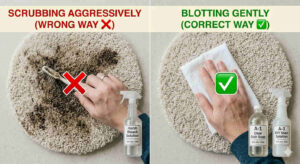
Even people with the best intentions end up making stains harder to remove. These are the most common mistakes:
- Rubbing or scrubbing pushes the stain deeper and frizzes carpet fibers permanently
- Using hot water heat bonds most stains to carpet fibers and makes them much harder to remove
- Over-saturating the carpet too much liquid soaks into the padding and leads to mold or mildew
- Using a colored cloth dye from the cloth can transfer into the carpet
- Skipping the patch test hydrogen peroxide and some commercial cleaners can discolor certain carpets
That last point over-saturation is more common than you’d think, and it’s one of the main reasons people notice their carpet looking dingier after a DIY cleaning attempt. If that’s happened to you, here’s a detailed explanation of why carpet sometimes looks dirtier after cleaning — and what to do about it.
When Home Remedies Aren’t Enough
Not every stain responds to DIY treatment, and that’s completely normal. Some stains are just too deep, too old, or too chemically bonded for household products to fully remove. Continuing to scrub at that point often does more harm than good.
Consider calling a professional carpet cleaner if:
- The stain is older than 48 hours and isn’t responding to multiple treatments
- DIY attempts have left a yellow tinge or made the stain appear larger
- The stain has soaked through to the carpet padding underneath
- The carpet is made from wool, viscose, or another delicate natural fiber
- The stain covers a large area wider than about 12 inches
Professional cleaners use equipment that’s simply in a different league from anything available at a hardware store. Our truck-mounted systems paired with the Rotovac 360i deliver hundreds of multi-directional cleaning passes per minute that physical agitation combined with 200°F+ heat is the only reliable way to “unlock” tannins and other stubborn compounds that have chemically bonded to carpet fibers. Standard rental machines and store-bought cleaners don’t come close to that level of extraction.
If you’re in central Iowa, A-1 Carpet Cleaning provides professional carpet cleaning in Ames, Iowa and surrounding areas. Our team handles everything from fresh spills to deeply set stains with equipment and solutions you simply can’t replicate with a spray bottle and paper towels.
Frequently Asked Questions
Does club soda really remove red wine from carpet?
Yes, and it works best on fresh stains caught within the first 30 minutes. The carbonation helps lift wine pigments out of carpet fibers before they fully set. Use plain, unflavored club soda and blot immediately don’t pour a large amount, just enough to cover the stain.
How long before a red wine stain becomes permanent?
After about 24–48 hours, wine stains bond tightly to carpet fibers and become significantly harder to remove without professional equipment. Some stains can still be partially lifted, but full removal is rarely possible with DIY methods at that stage. Speed really is everything with wine stains.
Is baking soda safe to use on all carpet types?
Generally, yes. Baking soda is mild and safe for synthetic and most natural fiber carpets. It’s especially useful for absorbing residual moisture and neutralizing odors. As always, do a small test in a hidden area if you’re unsure.
Final Thoughts
Most carpet stains can be removed at home if you act quickly, stay calm, and follow the right process. The golden rules are simple: blot instead of scrub, use cold water, work from the outside in, and never oversaturate the carpet. For stains that have already set or if you’ve tried everything and the carpet still looks off professional cleaning is absolutely worth it.
Your carpet is an investment. A little quick action now, or a professional cleaning when it’s needed, can add years to its life. At A-1, we use the same pet-safe, low-VOC philosophy in our professional stain extraction that we recommend for your DIY home remedies because the Ames families and pets we serve deserve solutions that are as safe as they are effective.
Got a stain that won’t budge? We can help.
Set-in stains get harder to remove with every hour that passes. If DIY methods haven’t worked — or the stain is already dried — don’t keep scrubbing and risk damaging your carpet further.
📍 Serving Ames, Iowa & surrounding areas 📞 Call A-1 Carpet Cleaning: 515-432-7500 🌐 a-1-carpetcleaning.com
✅ IICRC-certified technicians ✅ Pet-safe, low-VOC solutions ✅ Deep stain extraction — including set-in wine, coffee & pet stains ✅ Free, no-obligation estimates
Call now for same-day emergency carpet stain removal in Ames, Iowa.