

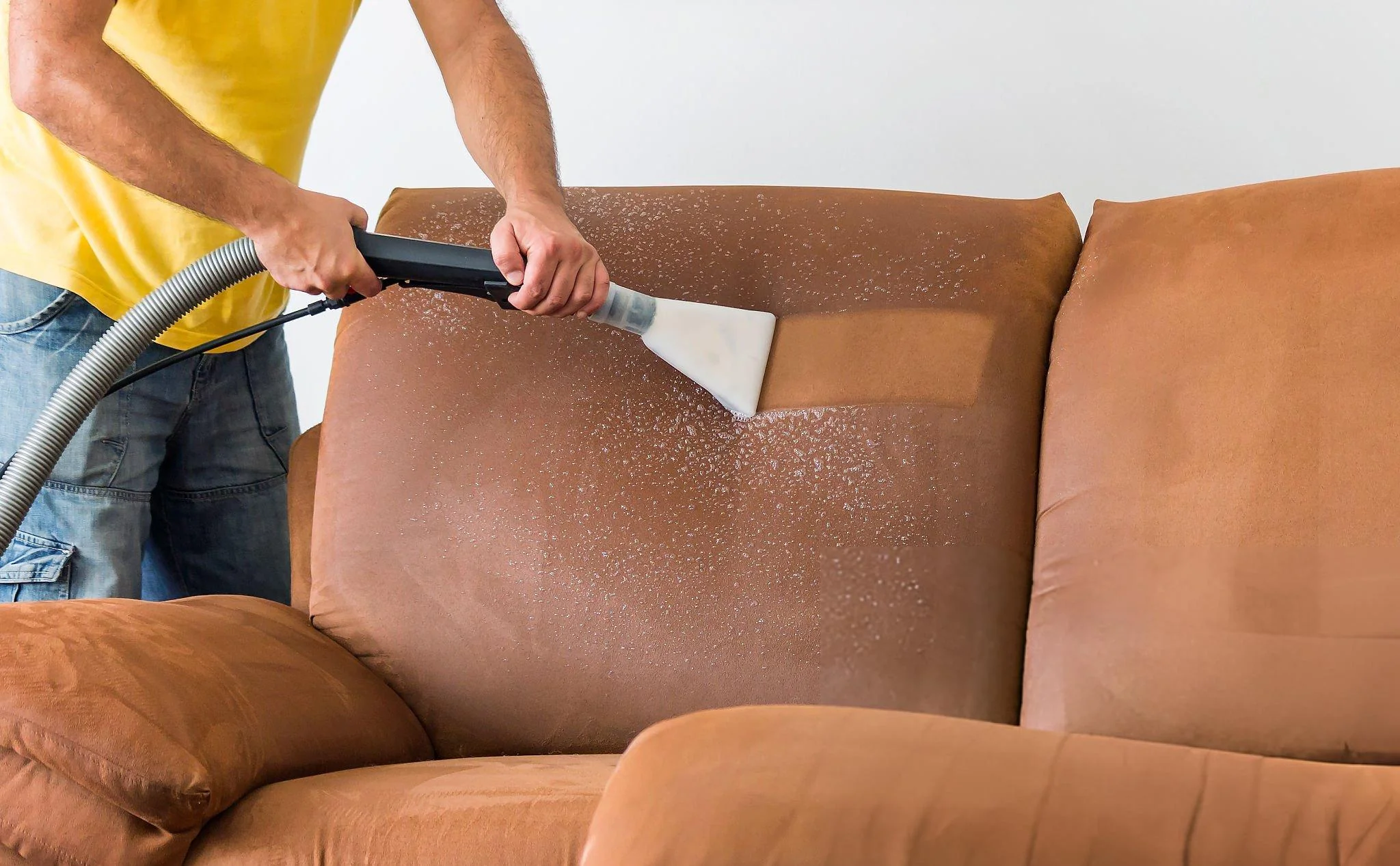
Microfiber holds up well to kids, pets, and daily use. What it doesn’t handle well is the wrong cleaner. How to clean a microfiber couch comes down to one thing: the fabric code on its tag. Use water on the wrong type and you can end up with a ring that’s harder to fix than the original stain.
Here’s how to read the tag, choose the right cleaner, clean the couch safely, and deal with water spots if one shows up anyway.
Short answer: Check the cleaning code on the tag first. W means water-based cleaners are allowed, S means water-free solvent cleaners only, WS or W-S means either may be used, and X means vacuum or light brushing only, with professional help for stains. Test any cleaner on a hidden spot first, blot spills instead of scrubbing, and apply cleaner to a white cloth rather than directly to the couch.
First, Find Your Cleaning Code
Don’t skip this step. Everything else depends on it.
Look for a small tag under the cushions or along the couch frame. You may see the combined code written as WS or W-S. Always follow any additional instructions printed on the manufacturer’s tag.
| Code | What It Means | How to Clean It |
|---|---|---|
| W | Water-based cleaners allowed | Water-based upholstery cleaner or foam from a mild dish soap solution |
| S | Water-free solvent cleaner only | Water-free upholstery or dry-cleaning solvent allowed by the manufacturer |
| W-S / WS | Water- or solvent-based cleaners | Either approved method; test first |
| X | No liquid cleaner | Vacuum or lightly brush; get professional help for stains |
Microfiber upholstery can carry W, S, WS, or X instructions, so don’t choose a cleaner based on the fabric name alone.
On S-code fabric, water can leave rings or change the texture, which is why water-based cleaners should be avoided.
If the tag is missing or unreadable, look up the manufacturer’s care instructions using the brand and model. If you still can’t confirm the cleaning code, avoid experimenting with water or solvents and have the fabric professionally assessed. Until then, vacuum the couch and blot spills with a dry white cloth.
What You’ll Need
- A vacuum with an upholstery or brush attachment
- Several clean white microfiber cloths
- For W-code fabric: a water-based upholstery cleaner or mild dish soap, warm water, and distilled water for rinsing
- For S-code fabric: a water-free upholstery solvent allowed by the manufacturer
- A soft-bristle brush
Isopropyl rubbing alcohol is one common DIY option for some solvent-safe microfiber, but check the manufacturer’s instructions first and always test a hidden area.
Solvents, including rubbing alcohol, are flammable, so keep them away from flames, sparks, and heat. Work in a well-ventilated room.
How to Clean a W-Code Microfiber Couch
If your tag says W or W-S, water-based cleaners are generally allowed. Check the manufacturer’s care instructions too, since some fabrics have additional restrictions on solvents, steam, or cleaning machines.
- Vacuum first. Use the upholstery attachment to remove dust, crumbs, pet hair, and loose dirt. Don’t forget under the cushions.
- Mix your cleaner. Use a water-based upholstery cleaner, or add a few drops of mild dish soap to a bowl of warm water and stir it into suds.
- Test a hidden spot. Dab a small amount on the back or underneath a cushion. Let it dry and check for discoloration, dye transfer, stiffness, or a ring.
- Barely dampen a cloth. Dip a white microfiber cloth into the suds and wring it out well. It should be damp, not wet.
- Wipe in sections. Work across the couch in small sections using light circular motions. Avoid soaking the fabric.
- Rinse and dry. Wipe the area again with a white cloth lightly dampened with distilled water to pick up soap residue. Distilled water reduces the risk of mineral spots because it doesn’t contain the dissolved minerals found in tap water. Let the couch air dry completely.
How to Clean an S-Code Microfiber Couch
If your tag says S, avoid water.
Use a water-free upholstery solvent allowed by the manufacturer’s care instructions. If you plan to use isopropyl rubbing alcohol as a DIY solvent, make sure the fabric is solvent-safe and test it on a hidden area first. Dyes, finishes, and backing materials can react differently.
Open a window before you start.
- Vacuum first. Remove loose dirt, crumbs, and pet hair.
- Test a hidden spot. Lightly dampen a white cloth with the approved solvent and dab an inconspicuous area. Let it dry and check for dye transfer, discoloration, texture changes, or a ring.
- Apply cleaner to the cloth. Lightly dampen a white microfiber cloth with the solvent instead of spraying the couch directly. This gives you better control and helps prevent over-wetting.
- Blot and wipe gently. Work in small areas, moving to a clean part of the cloth as dirt transfers. Because rubbing alcohol evaporates quickly, it is less likely to leave the type of water ring associated with water-based cleaning, but it can still discolor or change the texture of some fabrics.
- Brush the fibers. Once the area is completely dry, gently brush the microfiber to lift the nap.
After You Clean: Drying and Restoring the Nap
Let the couch dry completely before anyone sits on it.
Open a window or run a fan to improve airflow, but don’t use a hair dryer or space heater to speed things up.
If the microfiber feels stiff or flat after drying, gently brush it with a soft-bristle brush to restore the nap. Avoid stiff or wire brushes, which can damage the fibers.
How to Remove Common Stains
Grease or Oil
Sprinkle cornstarch or baking soda over the spot and let it sit for a few hours to absorb some of the oil. Vacuum it up, then clean the remaining mark using a method allowed by the couch’s cleaning code.
Ink or Lipstick
Follow the cleaning code.
On S or WS upholstery, a manufacturer-approved water-free solvent may help. On W upholstery, use a compatible water-based stain treatment rather than switching to a solvent unless the manufacturer specifically allows it.
For X upholstery, avoid liquid cleaners and consider professional cleaning.
Food and Drink
Blot the spill as soon as possible instead of rubbing it into the fabric.
Then clean the area according to the couch’s care code. For a W-code couch, a small amount of mild dish soap and water may be suitable if the manufacturer’s instructions allow it.
Pet Accidents
Blot the area immediately.
On W or WS upholstery, an enzyme cleaner made for upholstery may help break down odor, provided the product is compatible with the fabric.
On S upholstery, don’t use a water-based enzyme cleaner unless the manufacturer specifically allows it. Baking soda may help with surface odor once the area is dry, but if urine has soaked into the cushion or the smell remains, professional upholstery cleaning may be the safer option.
For X upholstery, avoid liquid treatments.
What to Avoid
Some cleaning mistakes can leave permanent marks:
- Water-based cleaners on an S-code couch
- Solvents on a W-code couch if the manufacturer prohibits them
- Scrubbing fresh spills instead of blotting
- Soaking the fabric
- Colored cloths that may transfer dye
- Bleach or harsh cleaning chemicals
- Stiff or wire brushes
- Direct heat from a hair dryer or space heater
- Guessing the cleaning method when the care tag is missing
How to Get Water Spots Out of a Microfiber Couch
Already have a water ring? In some cases, you can reduce or remove it.
On a W or WS couch, lightly dampen a clean white cloth with distilled water. Blot the entire ring evenly and feather the moisture slightly beyond the edge so there isn’t a hard wet-dry line.
Let the area air dry completely, then gently brush the fibers.
On an S-code couch, skip the water and use only a water-free solvent approved for the fabric. Rubbing alcohol may be an option for some solvent-safe microfiber, but test it on a hidden area first.
If the ring is still visible after the fabric dries, professional upholstery cleaning may be the safer next step.
When to Call a Pro
Home care can handle many everyday microfiber stains, but some situations are better left to a professional.
Consider professional upholstery cleaning if you’re dealing with:
- Large or old stains
- An X-code couch
- A couch with no readable cleaning code
- A solvent-only couch you’re unsure how to treat
- Strong or persistent pet odors
- Urine that has soaked into the cushions
- Years of built-up dirt
- A stain that keeps returning after cleaning
If your couch is leather rather than microfiber, our guide on cleaning a leather couch covers that material instead.
Doug and Renae have run A-1 Carpet Cleaning in Ames, Iowa since 2004. When you’d rather leave the upholstery to a professional, learn more about our upholstery cleaning in Ames.
Call (515) 432-7500 for a quote.
Frequently Asked Questions
What is the best thing to clean a microfiber couch with?
It depends on the cleaning code.
For a W-code couch, use a water-based upholstery cleaner or a mild soap-and-water solution if the manufacturer allows it. For an S-code couch, use a water-free upholstery solvent approved for that fabric.
Always test the cleaner on a hidden area first and use a clean white cloth.
Will water ruin a microfiber couch?
It can damage or leave marks on some S- or X-code upholstery.
W and WS fabrics generally allow water-based cleaning, but that doesn’t mean the couch should be soaked. Use as little moisture as possible and follow the manufacturer’s care instructions.
Distilled water is a useful choice for rinsing because it doesn’t contain the minerals found in tap water.
Can you use Dawn dish soap on a microfiber couch?
Usually, if the couch is W or WS and the manufacturer’s instructions allow a mild water-based soap.
Use only a drop or two in warm water, wring the cloth out well, and avoid soaking the fabric. After cleaning, wipe the area with a separate cloth lightly dampened with distilled water to remove soap residue.
Test a hidden spot first. Don’t use dish soap on S- or X-code upholstery.
If possible, choose a clear or free-and-clear dish soap to reduce the chance of dye or fragrance residue.
How do I get water spots out of a microfiber couch?
First check the cleaning code.
On W or WS upholstery, lightly dampen a clean white cloth with distilled water and blot the entire ring evenly, feathering slightly past the edge. Let it air dry, then gently brush the fibers.
On S upholstery, don’t use water. Use only a water-free solvent approved for the fabric.
Can you steam clean a microfiber couch?
Maybe, but a W or WS code alone doesn’t guarantee that steam is safe.
Check the manufacturer’s care instructions before using a steamer or extraction machine. Some W and WS fabrics allow water-based spot cleaning but specifically advise against steam or hot-water extraction.
Never steam S- or X-code upholstery unless the manufacturer explicitly allows it.
If steam is approved, test a hidden area first, avoid saturating the fabric, and let the couch dry completely before using it again.
How often should you clean a microfiber couch?
Vacuum it every week or two to remove dust, crumbs, and pet hair.
A deeper cleaning once or twice a year is reasonable for many households, although couches used heavily by kids or pets may need attention more often.
Treat spills as soon as they happen rather than waiting for your next full cleaning.
What if my microfiber couch has no cleaning tag?
Look up the manufacturer’s care instructions using the brand and model.
If you still can’t confirm the cleaning code, don’t guess by applying water, rubbing alcohol, or another solvent. Vacuum the couch and blot spills with a dry white cloth until you can identify the correct cleaning method or have the fabric professionally assessed.