

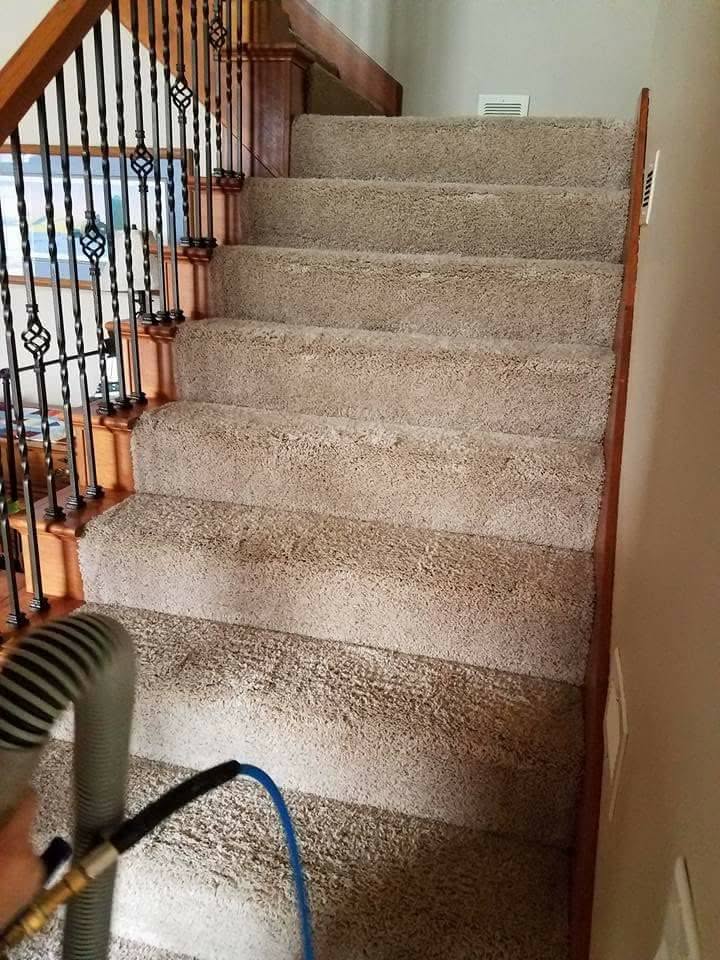
Carpeted stairs take more of a beating than almost any other floor in the house. Every trip up and down grinds dirt into the fibers, and the narrow steps and corners make them awkward to clean with a regular vacuum. The good news is that you do not need special equipment to get them looking fresh again. With a brush, a little cleaning solution, and the right order of steps, you can clean carpet on stairs by hand in an afternoon. Here is exactly how to do it.
Short answer: Work from the top step down. Remove pet hair first, vacuum each step (edges and corners included), spot treat any stains, then scrub gently with a soft brush and a mild carpet shampoo. Keep the moisture light and let the stairs dry fully before you walk on them.
Why Stairs Are Harder to Clean Than Regular Carpet
Stairs are a different job from open floor for a few reasons, and knowing them helps you clean smarter:
- They are high traffic. Every person and pet uses them daily, so dirt packs into the fibers faster than anywhere else.
- The shape fights you. Narrow treads, risers, and corners are hard to reach with a full-size vacuum or machine.
- They collect pet hair. Hair and fur settle into the edges and corners of each step and cling to the pile.
- Drying matters more. Wet stairs are a slip hazard, and too much moisture can seep into the wood underneath, so you have to keep it light.
What You Will Need
- A handheld vacuum, or a regular vacuum with a brush and crevice attachment
- A soft-bristle carpet brush
- A pet hair remover, lint roller, or rubber squeegee (if you have pets)
- Mild carpet shampoo or a little dish soap
- A spray bottle and warm water
- Clean white cloths or towels
Keep the stairs barely damp, never soaked.
How to Clean Carpet on Stairs Step by Step
- Remove loose hair first. If you have pets, run a rubber squeegee, lint roller, or pet hair brush down each step to lift the hair that a vacuum tends to miss.
- Vacuum top to bottom. Start at the top step and work down so you are not tracking dirt onto steps you have already done. Use the brush and crevice attachments to get the edges, corners, and risers.
- Spot treat stains. Mix a little mild dish soap or carpet shampoo with warm water, dab it onto any stains with a cloth, and gently work from the outside of the stain inward so it does not spread.
- Scrub gently. Lightly mist each step with your cleaning solution and work it in with a soft-bristle brush using small circular motions. Do not overwet the carpet.
- Blot and rinse. Press a clean, dry towel onto each step to lift the moisture and loosened dirt, then wipe once more with a damp cloth to remove any soap.
- Let them dry fully. Keep everyone off the stairs until they are completely dry, and run a fan nearby to speed it up and prevent musty odors.
How to Remove Stains From Stair Carpet
For the stains that show up most on stairs:
- Mud and dirt: let it dry first, then vacuum the loose bits before you touch it with water. Wetting mud just smears it deeper.
- Food and drink: blot up the spill, then dab with warm water and a drop of dish soap. Work outside in.
- Pet accidents: blot right away, then use an enzyme cleaner, which breaks down the odor rather than masking it.
For a full rundown on tougher stains, our guide on removing pet stains and odors from carpet walks through each one.
Dealing With Pet Hair on Stairs
Pet hair is the number one complaint on carpeted stairs, and a vacuum alone rarely gets it all. Before you vacuum, drag a rubber squeegee or a slightly dampened rubber glove down each step. The rubber creates static that pulls embedded hair up to the surface where you can collect it. A lint roller finishes the edges and corners. Doing this first makes the vacuuming and cleaning that follow far more effective.
How Often Should You Clean Stair Carpet?
Because stairs get so much traffic, they need attention more often than the rest of your carpet:
- Vacuum: weekly, more often with pets
- Spot clean: as soon as spills happen
- Deep clean by hand: every few months
- Professional deep clean: once or twice a year to reach what hand cleaning cannot
A Few Safety Tips
- Wear sturdy, non-slip footwear while you work, since you are moving up and down the steps
- Never leave the stairs wet, as damp carpet on stairs is a real slip hazard
- Keep cords and buckets off the steps so no one trips
When to Call a Pro in Ames
Hand cleaning keeps stair carpet looking good between deep cleans, but stairs hold a surprising amount of deep-down dirt that home methods cannot fully reach. For a once-a-year deep clean, or for set-in stains and odors, a professional makes the difference. A-1 Carpet Cleaning uses truck-mounted hot water extraction that pulls dirt out of the fibers, stairs included, and our professional carpet cleaning in Ames covers your whole home. Call us at 515-432-7500 for a free quote.
Frequently Asked Questions
How do you clean carpet on stairs by hand?
Remove pet hair with a rubber squeegee or lint roller, vacuum each step top to bottom, spot treat stains, then scrub gently with a soft brush and mild carpet shampoo. Keep the moisture light and let the stairs dry fully.
What is the best way to clean carpeted stairs?
Work from the top step down so you do not track dirt onto clean steps, use a brush attachment for the edges and corners, and control how much water you use so the stairs dry quickly and safely.
How do you get pet hair out of stair carpet?
Drag a rubber squeegee or a damp rubber glove down each step before vacuuming. The static pulls embedded hair to the surface, and a lint roller cleans up the edges.
How often should stair carpet be cleaned?
Vacuum weekly, spot clean spills right away, deep clean by hand every few months, and have a professional deep clean once or twice a year since stairs get heavy traffic.
Can you use a carpet cleaner machine on stairs?
Yes, many carpet cleaners come with a stair or upholstery attachment. Vacuum and spot treat first, then follow the machine’s instructions and keep the carpet from getting too wet.